
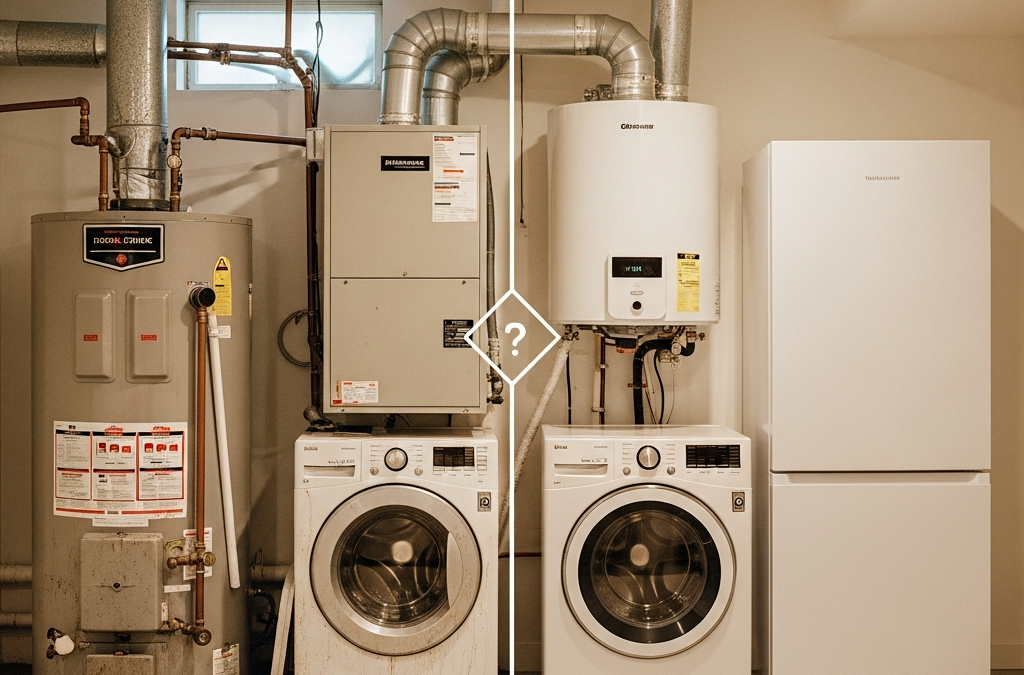
Every component in your home has a finite lifespan. From the roof overhead to the water heater in your basement, from kitchen appliances to exterior siding, nothing lasts forever. Understanding typical lifespans for major home components helps you plan financially for eventual replacements, recognize when components approach end-of-life, and make informed decisions about repairing versus replacing failing systems.
The repair-versus-replace decision ranks among homeownership's most challenging judgments. Replace too early and you waste money on components with useful life remaining. Repair too aggressively and you throw good money after bad on systems that should be replaced. Making smart decisions requires understanding component lifespans, recognizing signs of failure, evaluating repair costs against replacement costs, and considering factors beyond simple financial calculations.
This comprehensive guide provides expected lifespan ranges for virtually every major home component, explains factors that affect longevity, and offers decision frameworks for evaluating repair versus replacement options. Whether you're facing an immediate repair decision or planning long-term home maintenance budgets, this reference helps you make informed, cost-effective choices.
Understanding Component Lifespans
Component lifespans represent estimates based on typical usage, average maintenance, and moderate climate conditions. Your actual experience may differ significantly based on several factors.
Quality and installation dramatically affect lifespan. Premium components typically last longer than budget versions—a high-end water heater might last 15-20 years while a basic model fails at 8-10 years. More importantly, proper installation makes the difference between components reaching their expected lifespan and failing prematurely. Improperly installed HVAC systems, incorrectly pitched roofing, or poorly vented appliances fail years before their time.
Maintenance quality extends or shortens lifespans substantially. HVAC systems with annual professional maintenance routinely exceed 20 years while neglected systems fail at 12-15 years. Water heaters with flushed tanks last years longer than those never maintained. Regular maintenance represents the highest-return investment in component longevity.
Usage patterns affect wear rates. Washing machines running multiple loads daily wear faster than those used weekly. HVAC systems in extreme climates work harder and age faster. High-traffic flooring wears more quickly than flooring in seldom-used rooms. Consider your actual usage when estimating remaining component life.
Environmental conditions accelerate or slow deterioration. Coastal properties face salt air corrosion. Humid climates encourage mold and rot. Areas with extreme temperature swings stress materials through expansion and contraction. UV exposure degrades exterior materials. Your specific environment affects every outdoor component.
Technological advancement sometimes makes replacement advisable before the end of useful life. A 20-year-old HVAC system might function but consume twice the energy of modern systems. Old appliances work but waste electricity. Sometimes replacement makes financial sense even when components haven't failed.
The lifespans provided below represent typical ranges for average conditions. Use them as starting points, adjusting for your specific circumstances.
Roofing Systems
Asphalt shingles (3-tab): 15-20 years - Basic asphalt shingles represent the most common and economical roofing. Lifespan depends heavily on climate, installation quality, and ventilation. Hot climates or inadequate attic ventilation shortens lifespan significantly.
Asphalt shingles (architectural/dimensional): 20-30 years - Heavier, more durable than 3-tab shingles. Better wind and impact resistance. Premium versions can reach 30+ years with proper maintenance and moderate climate.
Metal roofing: 40-70 years - Standing seam metal roofs last 50+ years. Metal shingle systems last 40+ years. Requires minimal maintenance. Excellent for extreme weather conditions. More expensive initially but superior long-term value.
Wood shakes/shingles: 20-40 years - Cedar shakes last longer than pine. Requires regular maintenance including periodic treatments. Fire concerns in some jurisdictions. Climate dramatically affects lifespan—wet climates cause rot, dry climates cause splitting.
Slate: 75-200 years - Premium natural slate lasts essentially forever with proper installation and maintenance. However, the underlying roof structure may need attention before slate itself fails. Very expensive but unmatched longevity.
Tile (clay or concrete): 50-100 years - Extremely durable but heavy, requiring reinforced roof structures. Individual tiles can crack or slip, needing periodic replacement. Overall system lasts many decades.
Flat/low-slope roofing systems: 10-30 years - Varies dramatically by material. TPO and EPDM rubber membranes last 15-25 years. Built-up roofing lasts 15-30 years. Modified bitumen lasts 10-20 years. Requires more maintenance than pitched roofing.
Replace when: You see widespread shingle damage, multiple leaks, daylight through roof boards, or roofing reaches typical lifespan for its type. Repair when damage is localized to small areas and remaining roof shows good condition.
HVAC Systems
Central air conditioning: 12-15 years - Coastal environments with salt air may see 10-12 years. Well-maintained systems in moderate climates can reach 18-20 years. Refrigerant type matters—older R-22 systems should be replaced since refrigerant is being phased out.
Heat pumps: 10-15 years - Work harder than standard AC since they provide both heating and cooling. Southern climates where heat pumps run year-round see shorter lifespans. Maintenance significantly affects longevity.
Gas furnaces: 15-30 years - High-efficiency models (90%+ AFUE) typically last 15-20 years. Mid-efficiency models (80-89% AFUE) last 15-25 years. Older low-efficiency models can exceed 30 years but waste enormous energy. Consider replacement based on efficiency even if still functioning.
Boilers: 15-30 years - Cast iron boilers can exceed 30 years. Steel boilers typically last 15-20 years. Maintenance quality dramatically affects lifespan. Sediment buildup significantly shortens lifespan.
Ductwork: 20-25 years - Well-installed metal ductwork can last longer, but connections loosen and seals deteriorate over time. Flexible ductwork has shorter lifespan. Regular sealing and insulation checks extend life.
Thermostats: 10-20 years - Modern digital thermostats last 10+ years. Mechanical thermostats can last 20+ years. However, upgrading to programmable or smart thermostats provides substantial energy savings even if old thermostats function.
Replace when: Systems require frequent repairs (multiple times annually), repair costs approach 50% of replacement cost, efficiency has declined dramatically, or you're replacing one major component (compressor, heat exchanger) in an aging system. The "5,000 rule" helps decisions: multiply repair cost by system age in years—if product exceeds $5,000, replace rather than repair.
Plumbing Systems
Water heaters (traditional tank): 8-12 years - Lifespan depends heavily on water quality, usage, and maintenance. Hard water shortens life. Flushing tanks annually extends life. Most failures occur suddenly through tank rupture rather than gradual decline.
Water heaters (tankless): 15-20 years - More expensive initially but longer lifespan and better energy efficiency. Requires annual maintenance including descaling in hard water areas. Compact size and endless hot water provide additional benefits.
Supply pipes (copper): 50+ years - Copper pipes in most applications last 50-70 years. However, pinhole leaks can develop earlier in areas with aggressive water chemistry. Type M copper (thinnest wall) may develop problems earlier than Type L or Type K.
Supply pipes (PEX): 40-50 years - Still relatively new material but showing excellent longevity. Flexible, resistant to corrosion and scale, easy to install. UV exposure degrades PEX so it must be protected from sunlight.
Supply pipes (galvanized steel): 20-50 years - Once common, now largely replaced. Interior corrosion reduces flow over time. Lifespan depends on water chemistry. Replacement often triggered by flow reduction rather than leaks.
Drain lines (cast iron): 50-100 years - Very durable but eventually develops rust and may crack. Underground sections prone to root intrusion. Above-grade sections accessible for repair or replacement.
Drain lines (PVC): 40+ years - Modern drain material showing excellent performance. Resistant to corrosion and chemical damage. Properly installed PVC systems should last the life of the home.
Fixtures (faucets, toilets): 15-20 years - Quality matters enormously. Premium fixtures last 20+ years. Budget fixtures may fail at 10 years. Cartridges and internal components can be replaced to extend fixture life.
Replace when: Water heaters approach 10 years even if functioning—proactive replacement prevents flooding from sudden tank failure. Replace supply pipes if multiple leaks develop or water flow/quality degrades. Repair individual fixture issues unless fixtures are outdated or inefficient.
Appliances
Refrigerators: 10-15 years - Bottom-freezer and built-in models tend toward the longer end. Side-by-side models with through-door ice/water dispensers trend shorter. Compressor failure typically signals end of life since repair costs approach replacement cost.
Ranges/ovens (gas): 15-20 years - Very durable with simple mechanical systems. Electronic controls may fail before cooking elements. Easy to repair economically.
Ranges/ovens (electric): 13-18 years - Heating elements relatively easy to replace. Electronic controls and glass cooktops are expensive repair items that may not justify repair of older units.
Dishwashers: 9-12 years - Pump and motor assemblies determine lifespan. Hard water areas see shorter lifespans due to mineral buildup. Newer efficient models save water and energy, potentially justifying early replacement.
Garbage disposals: 10-15 years - Simple devices lasting longer with proper use (avoid fibrous materials, run cold water). Replacement is relatively inexpensive, often justifying replacement over repair.
Washing machines (top-load): 10-14 years - Mechanical transmission failures common. High-efficiency models may have shorter lifespans due to complex electronics and more plastic components.
Washing machines (front-load): 10-13 years - Bearing and seal failures common. More efficient but slightly shorter average lifespan than top-loaders. Maintenance including door gasket cleaning extends life.
Dryers: 10-13 years - Gas dryers typically last slightly longer than electric. Simple mechanical systems easy to repair. However, older units use significantly more energy than modern models.
Microwave ovens: 9-10 years - Magnetron failure most common cause of replacement. Relatively inexpensive to replace, usually not worth repairing.
Replace when: Repair costs exceed 50% of replacement cost for aging appliances, appliances require frequent repairs, or energy efficiency improvements justify replacement of functional but inefficient units.
Exterior Components
Siding (vinyl): 20-40 years - Quality and installation affect lifespan dramatically. UV exposure causes fading and brittleness. Impact damage from storms or hail. Proper installation with drainage plane and adequate ventilation extends life.
Siding (wood/fiber cement): 30-50 years - Requires periodic painting/staining (every 5-10 years). Fiber cement more durable than wood, resistant to rot and insects. Wood requires vigilant moisture protection.
Siding (brick/stone veneer): 50-100+ years - Extremely durable but mortar joints require repointing every 25-30 years. Proper water management behind veneer critical to prevent structural damage.
Exterior paint/stain: 5-10 years - Depends on quality, surface preparation, and exposure. South and west faces require more frequent repainting. Proper surface prep critical to longevity.
Windows (wood): 20-40 years - High maintenance but very durable with proper care. Requires periodic painting and hardware maintenance. Quality wood windows can be rebuilt multiple times.
Windows (vinyl): 20-30 years - Low maintenance but can't be repainted when fading occurs. Modern vinyl windows with welded corners and quality hardware perform well. Cheaper builder-grade vinyl windows trend toward shorter lifespans.
Windows (aluminum): 15-25 years - Durable but conducts heat and cold, reducing energy efficiency. Coastal areas see corrosion issues. Largely replaced by vinyl and fiberglass in residential applications.
Windows (fiberglass): 30-50 years - Premium option with excellent durability and energy efficiency. Can be painted. More expensive but superior performance and longevity.
Doors (wood exterior): 30+ years - With proper maintenance including periodic refinishing. Storm doors protect and extend life. Quality matters enormously—solid wood doors outlast hollow-core.
Doors (fiberglass): 30-50 years - Excellent alternative to wood. Resist warping, rot, and insects. Can be stained to resemble wood. Low maintenance with excellent performance.
Doors (steel): 30-50 years - Durable and secure. Can dent from impact. May rust if coating is damaged. Energy-efficient with proper insulation. Good value for durability.
Replace when: Visible deterioration, air leaks increasing energy costs significantly, functionality problems (sticking, won't close properly), or damage from storms/accidents. Often replacement provides better value than extensive repairs to failing components.
Foundation and Structure
Concrete foundations: 80-100+ years - Extremely durable if properly constructed and maintained. Issues typically involve settling, cracking from shifting soil, or water damage rather than concrete deterioration.
Basement waterproofing: 10+ years - Interior waterproofing systems using drainage and sump pumps require maintenance but last indefinitely with proper care. Exterior waterproofing membranes last 10-15 years typically.
Concrete driveways: 25-50 years - Depends on climate, installation quality, and maintenance. Freeze-thaw cycles and de-icing chemicals shorten lifespan in cold climates. Sealing extends life.
Asphalt driveways: 15-20 years - Requires periodic sealing (every 2-3 years) to reach expected lifespan. Cheaper initially but shorter life than concrete. Vulnerable to fuel spills and extreme heat.
Decks (pressure-treated wood): 15-25 years - Requires annual inspection and periodic sealing/staining. Lifespan depends heavily on maintenance, exposure, and lumber quality.
Decks (composite): 25-30 years - More expensive but low maintenance and longer-lasting than wood. Early composite materials had issues; modern products perform much better.
Fencing (wood): 15-20 years - Depends on wood type (cedar lasts longer than pine), climate, and maintenance. Ground contact sections fail first. Periodic sealing extends life.
Fencing (vinyl): 20-30 years - Low maintenance with good durability. UV exposure causes some discoloration. More expensive initially but minimal maintenance costs.
Replace when: Structural issues develop, widespread deterioration occurs, or repair costs approach replacement costs. Foundation problems always warrant professional structural evaluation before attempting repairs.
Interior Components
Interior paint: 5-10 years - Depends on traffic, quality, and wall surface condition. High-traffic areas and kitchens/bathrooms need more frequent repainting. Quality paint lasts longer.
Carpet: 5-10 years - Heavy traffic areas toward shorter end. Quality padding extends carpet life. Stain-resistant treatments help. Replacement often triggered by appearance rather than actual wear-through.
Hardwood flooring: 30-100+ years - Can be refinished 4-6 times over its life, each refinishing extending usable life. Quality hardwood floors last essentially forever with proper maintenance and periodic refinishing.
Tile flooring: 50-100+ years - Tile itself extremely durable. Grout may need periodic regrouting. Cracked tiles can be individually replaced. Quality tile floors outlast home ownership.
Vinyl/laminate flooring: 10-25 years - Depends on quality and installation. Water damage common failure mode for laminate. Vinyl plank technology improving durability.
Countertops (laminate): 10-20 years - Affordable but can chip, burn, or delaminate. Replacement often cosmetic choice rather than functional failure.
Countertops (granite/quartz): 25+ years - Extremely durable. Proper sealing (granite) maintains appearance. Essentially permanent with minimal maintenance.
Cabinets (stock): 10-20 years - Quality varies enormously. Hardware failures and hinge problems more common than structural issues. Can often be refaced to extend life.
Cabinets (custom/semi-custom): 30-50 years - Quality construction and materials provide excellent longevity. Hardware can be replaced. Good candidates for refacing/refinishing.
Replace when: Functional failures occur, appearance degrades beyond acceptability, or you're undertaking renovation anyway. Many interior components replaced for aesthetic rather than functional reasons.
The Repair vs. Replace Decision Framework
Making smart repair-versus-replace decisions requires evaluating multiple factors beyond simple cost comparison.
Age as percentage of expected lifespan: Components in the last 25% of expected life warrant replacement consideration even for moderate repairs. A 9-year-old water heater (expected life 10-12 years) should be replaced rather than repaired even if repair seems economically viable—another failure is imminent.
Repair cost as percentage of replacement cost: When repairs exceed 50% of replacement cost, replacement usually makes better financial sense. For aging components (over 75% of expected life), even repairs at 30-40% of replacement cost might warrant replacement.
Energy efficiency improvements: Replacing functional but inefficient components can pay for itself through energy savings. A 20-year-old HVAC system using twice the energy of modern systems costs $1,000+ annually in wasted energy—replacement pays for itself in 5-8 years while providing better comfort.
Warranty coverage: New components include warranties (1-10 years depending on component). Extended repairs on old components provide no warranty coverage—you're risking another failure immediately after expensive repairs.
Disruption and inconvenience: Some repairs require extensive work. If you're tearing out walls to repair pipes, consider complete replacement of aging systems while access is easy rather than facing the same disruption again soon.
Upcoming renovations: If you're planning renovations involving a system, replace it during renovation rather than maintaining old components you'll replace anyway soon. Coordinate timing to minimize total disruption and cost.
Availability of repair parts: Older components may lack available parts or require expensive custom fabrication. When parts aren't readily available, replacement becomes more practical even for otherwise repairable components.
Technology improvements: Modern components often provide substantial improvements—smart thermostats, water-sensing leak detectors, energy monitoring, remote control. These features add value beyond simple replacement of broken items.
Understanding these factors and applying them to your specific situation helps you make decisions balancing short-term costs against long-term value and avoiding premature replacement while not throwing good money after bad on dying components.
Knowing when issues truly demand professional attention versus situations you can monitor helps you evaluate whether problems warrant immediate replacement or can be safely repaired and monitored.
Frequently Asked Questions About Component Lifespans
How accurate are the lifespan estimates for home components?
Lifespan estimates represent averages based on typical conditions, proper installation, and regular maintenance. Your actual experience can vary significantly—some components fail earlier, others last longer. Factors affecting accuracy include product quality, installation quality, maintenance frequency, usage intensity, environmental conditions, and luck. Use estimates as planning tools rather than guarantees, and monitor aging components closely as they approach expected end-of-life.
Should I replace components proactively before they fail?
For certain components, proactive replacement makes sense. Water heaters should be replaced at 8-10 years before catastrophic failure causes flooding. HVAC systems approaching 15-20 years benefit from planned replacement during moderate weather rather than emergency replacement during temperature extremes. However, many components provide warning signs before failure—monitor closely but don't replace prematurely. Balance proactive replacement for critical systems against extracting full value from components nearing but not at end-of-life.
Does higher cost always mean longer lifespan?
Not always, but generally yes for major components. Premium appliances, HVAC systems, and fixtures typically use better materials and construction, resulting in longer lifespans. However, the relationship isn't linear—a $3,000 refrigerator won't last three times as long as a $1,000 model. Mid-range products often provide the best value, offering good longevity without premium prices. The lowest-priced options almost always have shorter lifespans. Research specific products—sometimes mid-priced brands outperform premium brands through better engineering.
How much does maintenance really extend component lifespan?
Dramatically. HVAC systems with annual professional maintenance routinely last 20+ years versus 12-15 years without maintenance. Water heaters with flushed tanks last years longer. Wood decks with annual sealing last 5-10 years longer than untreated decks. According to research from the National Association of Home Builders, proper maintenance extends most component lifespans by 20-50%. Maintenance represents the highest-return investment you can make in component longevity.
When should I replace appliances for energy efficiency rather than waiting for failure?
Calculate energy savings versus replacement cost. If annual energy savings exceed 20% of replacement cost, replacement pays for itself in 5 years—often worthwhile. For example, if a new refrigerator saves $100 annually and costs $1,200, payback is 12 years—marginal. But if your 20-year-old refrigerator costs $200 more annually than a new efficient model, payback is 6 years—good investment. Use online energy calculators comparing old versus new appliance consumption to inform decisions.
What's the most cost-effective time to replace multiple components?
When undertaking renovation or major work anyway. If you're remodeling a kitchen, replace all appliances even if some still function—you avoid future disruption and can coordinate designs. If replacing HVAC, consider upgrading to whole-house dehumidifier or air purifier at the same time since installation access is already established. Coordinate related replacements to minimize total labor costs and disruption.
How do I know if a component is worth repairing?
Apply the 50% rule: if repair costs exceed 50% of replacement cost on a component that's completed 75% of its expected lifespan, replace instead of repair. For younger components, repair makes sense even for substantial costs. For old components approaching end-of-life, even moderate repairs might not be worthwhile. Also consider: Is this the first problem or have there been multiple issues? Are replacement parts readily available? Does repair include any warranty?
Should I buy extended warranties on major components?
Generally no for homeowners with adequate emergency funds. Extended warranties are profitable for sellers, meaning they're statistically not good value for buyers. Put the warranty cost into your home maintenance fund instead—you'll likely come out ahead. However, extended warranties might make sense if you lack emergency funds, are risk-averse, or the component is particularly expensive to replace. Read warranty terms carefully—many exclude common failure modes or have expensive deductibles.
What components tend to fail earlier than their expected lifespan?
Components with moving parts or water exposure fail earlier than expected more often. Dishwashers, garbage disposals, and washing machines often fail before their estimated lifespans. Electronics in modern appliances create more failure points than mechanical systems—a simple mechanical timer outlasts complex electronic controls. Water heaters in hard water areas fail earlier. HVAC systems in extremely hot or cold climates work harder and fail sooner. Components without regular maintenance fail significantly earlier than maintained items.
How do I plan financially for major component replacements?
Create a replacement reserve fund based on component ages and expected lifespans. If your roof has 10 years remaining and replacement costs $15,000, save $1,500 annually ($125 monthly) toward replacement. Apply this calculation to all major components—HVAC, water heater, appliances, etc. Your total monthly allocation funds a reserve that's available when components fail. This approach transforms unexpected expenses into planned ones you're financially prepared to handle.
Are there warning signs before components fail?
Yes, most components provide warning signs. HVAC systems become noisier, cycle more frequently, or lose efficiency. Water heaters develop leaks around the base or produce rusty water. Appliances require frequent repairs or don't perform properly. Roofs show missing shingles or granule loss. Pay attention to performance changes—they indicate developing problems. Addressing issues at early warning stages prevents catastrophic failures and may extend component life through repair or maintenance.
Conclusion: Planning for the Lifecycle of Your Home
Understanding component lifespans transforms homeownership from reactive crisis management to proactive planning. When you know your water heater should last 10 years and it's currently 8 years old, you plan financially and emotionally for replacement rather than panicking when it inevitably fails.
This knowledge helps you budget appropriately, setting aside reserves for predictable replacements rather than scrambling when components fail. It helps you make smarter repair-versus-replace decisions, avoiding throwing good money after bad on aging components while not replacing prematurely items with useful life remaining.
Remember that lifespan estimates are guidelines, not guarantees. Monitor components as they age, maintaining them properly to extend their useful life and watching for warning signs of impending failure. Quality, proper installation, regular maintenance, and appropriate usage all affect actual lifespans—sometimes dramatically.
Use this guide as a reference when facing repair decisions, planning long-term home budgets, or evaluating home inspection findings when buying or selling property. Understanding what's normal for component lifespans and when replacement becomes necessary empowers you to make informed decisions protecting your home investment.
Your home's components will all eventually need replacement—that's the nature of homeownership. The question isn't whether you'll face these expenses but when, and whether you'll be financially and mentally prepared when the time comes. With proper planning based on realistic lifespan expectations, you transform inevitable replacements from crises into manageable, planned expenses that keep your home functioning optimally for decades.
Start today by inventorying your home's major components, their ages, and estimated remaining lifespans. This simple exercise reveals your replacement timeline and allows you to plan accordingly, ensuring you're never caught financially unprepared when components reach end-of-life.