
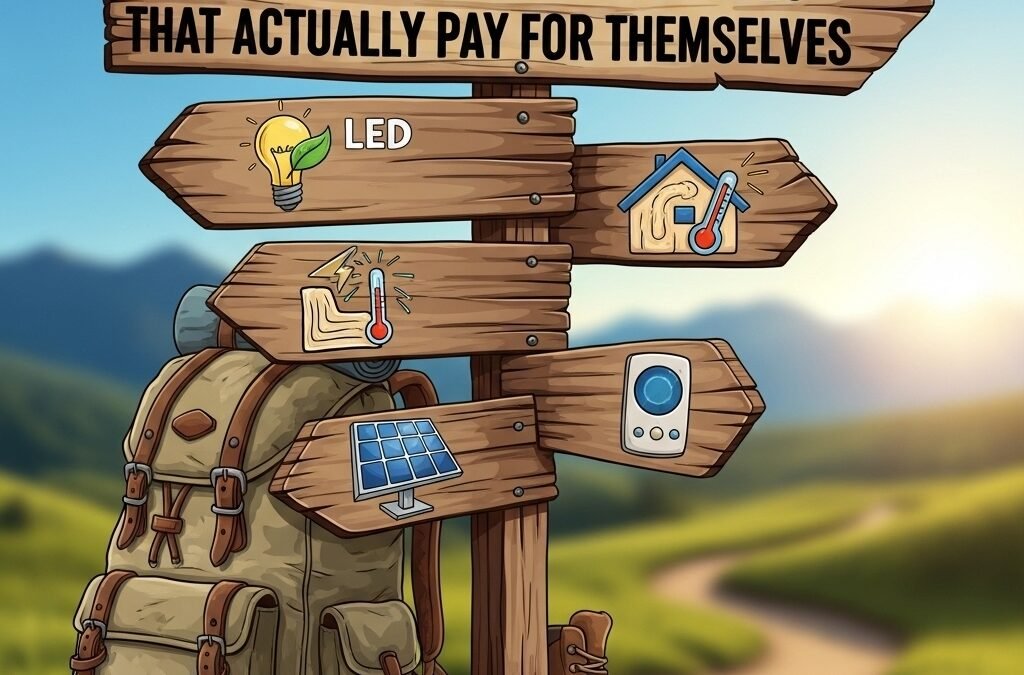
Let me ask you something: how did you feel when you opened your last energy bill? If you're like most homeowners, it probably wasn't a feeling of joy and satisfaction. Maybe you wondered where all that energy is going, or perhaps you've been putting off improvements because you're not sure which ones are actually worth the investment.
Here's what I wish someone had told me years ago: the best energy efficiency upgrades aren't just about saving the planet (though that's great too) – they're about saving money while making your home more comfortable. We're talking about improvements that literally pay for themselves over time, then keep putting money back in your pocket for years to come.
The key is knowing which improvements give you the biggest bang for your buck and understanding the real-world payback periods so you can make smart decisions about where to invest your home improvement dollars.
Insulation: The Invisible Superhero
If your home were a person, insulation would be its winter coat. And just like you wouldn't head out into a blizzard wearing a t-shirt, your house shouldn't try to stay comfortable without proper insulation.
The beautiful thing about insulation is that it works year-round. In winter, it keeps your expensive heated air inside where it belongs. In summer, it keeps that costly cooled air from escaping while preventing hot outdoor air from sneaking in. It's like having a thermal barrier that works 24/7 to keep your comfort costs down.
Attic insulation typically offers the fastest payback because heat naturally rises, and inadequate attic insulation lets all that heated air escape through your roof. Most homes need much more insulation than they currently have, especially if they were built more than twenty years ago when insulation standards were lower.
Wall insulation can be trickier in existing homes since you don't want to tear up all your walls, but blown-in insulation can be added through small holes that are easily patched afterward. The improvement in comfort can be dramatic – no more cold walls in winter or hot walls in summer.
Don't forget about basement and crawl space insulation either. These areas are often completely overlooked, but they can account for significant energy loss. Plus, properly insulated basements and crawl spaces are more comfortable and less prone to moisture problems.
Windows: More Than Just a Pretty View
Windows are complex when it comes to energy efficiency because they serve multiple purposes. Yes, you want them to keep conditioned air inside, but you also want natural light and views. The good news is that today's energy-efficient windows can do it all.
If you have single-pane windows, upgrading to double or triple-pane windows with low-E coatings can dramatically reduce energy loss while improving comfort. You'll notice fewer drafts, less condensation, and more consistent temperatures throughout your home.
But full window replacement isn't always necessary. Storm windows can provide many of the same benefits for existing windows that are otherwise in good shape. They're particularly effective for historic homes where maintaining original windows is important.
Window film is another option that's gained popularity. High-quality window films can reduce heat gain in summer while still allowing natural light, and they're much more affordable than full window replacement.
HVAC: The Heart of Home Comfort
Your heating and cooling system is probably your home's biggest energy user, which means it's also your biggest opportunity for savings. But HVAC improvements aren't just about buying the most expensive, highest-efficiency equipment – they're about creating a system that works efficiently as a whole.
Modern high-efficiency furnaces and heat pumps use significantly less energy than older systems while providing better, more consistent comfort. If your system is more than fifteen years old, replacement might make both financial and comfort sense.
But here's something many homeowners don't realize: even the most efficient HVAC system won't perform well if your ductwork is leaky or poorly insulated. Up to thirty percent of heated or cooled air can be lost through leaky ducts, which means you're literally paying to condition your attic, basement, or crawl space.
Professional duct sealing and insulation can provide impressive returns while improving comfort throughout your home. You'll notice more consistent temperatures between rooms and shorter run times for your equipment.
Smart thermostats are another upgrade that typically pays for itself quickly. These devices learn your schedule and preferences, automatically adjusting temperatures for optimal efficiency without sacrificing comfort. Many models can be controlled remotely, so you're never paying to heat or cool an empty house.
Water Heating: The Steady Energy User
Water heating typically accounts for the second-largest energy use in most homes, but it's often overlooked when people think about efficiency improvements. Unlike your HVAC system, which you notice immediately when it's not working, water heaters quietly use energy around the clock.
Tankless water heaters provide hot water on demand rather than keeping a large tank of water hot all the time. For many households, this can result in significant energy savings while providing the convenience of never running out of hot water.
Heat pump water heaters are another excellent option. They work by extracting heat from the surrounding air to heat water, using much less electricity than traditional electric water heaters. They work best in areas with consistent moderate temperatures.
Even simple improvements like insulating your water heater tank and the first few feet of hot water pipes can provide immediate savings. These are easy DIY projects that cost very little but can reduce standby heat loss significantly.
Lighting: Small Changes, Big Impact
Lighting might not be your biggest energy user, but it's one of the easiest and fastest areas to improve. Plus, the improvements in LED technology over the past few years mean you can now get beautiful, comfortable light while using a fraction of the energy.
LED bulbs now last much longer than traditional bulbs while using about seventy-five percent less energy. They're available in virtually any color temperature and brightness level, so you don't have to sacrifice ambiance for efficiency.
Smart lighting controls can maximize your savings by ensuring lights aren't left on unnecessarily. Motion sensors for areas like basements, garages, and closets, timers for outdoor lighting, and dimmer switches throughout the house all contribute to energy savings while improving convenience.
Air Sealing: The Hidden Energy Leak
Here's something that might surprise you: your home probably has air leaks equivalent to leaving a window partially open year-round. These leaks force your heating and cooling system to work harder while making your home less comfortable.
The good news is that air sealing is often one of the most cost-effective improvements you can make. Professional energy audits can identify specific leak locations, but you can find many yourself by feeling for drafts around windows, doors, electrical outlets, and anywhere different materials meet.
Common air leak locations include around windows and doors, electrical outlets and switches on exterior walls, plumbing and electrical penetrations, attic access points, and anywhere the foundation meets the house frame.
Sealing these leaks with caulk, weatherstripping, or expanding foam can provide immediate comfort improvements and energy savings. It's detailed work, but it's also very satisfying – you can literally feel the difference in comfort immediately.
Making Smart Investment Decisions
When planning energy efficiency improvements, it's helpful to think about your specific situation. Homes in extreme climates typically see faster payback periods for efficiency improvements because energy use is higher. Similarly, homes with very high or very low energy costs will see different economics than homes with average utility rates.
Professional energy audits can be incredibly valuable for prioritizing improvements. Auditors use specialized equipment to identify exactly where your home is losing energy, which takes the guesswork out of planning improvements.
Many utility companies offer rebates and incentives for energy efficiency improvements, which can significantly improve payback periods. Some utilities even offer financing programs that let you pay for improvements over time through your energy bill.
Don't forget about federal and state tax credits either. These incentives change periodically, but they can make expensive improvements much more affordable.
The Comfort Factor
While we've been talking about financial payback, don't underestimate the comfort improvements that come with energy efficiency upgrades. Homes with good insulation, efficient windows, and proper air sealing maintain more consistent temperatures with fewer drafts and cold spots.
Better humidity control, improved indoor air quality, and reduced noise from outside are all bonus benefits that come with many efficiency improvements. These comfort improvements don't show up on your energy bill, but they certainly contribute to your quality of life.
Planning Your Approach
The most effective approach to energy efficiency is usually to start with the improvements that offer the fastest payback and biggest comfort improvements, then work your way through additional upgrades over time.
Air sealing and insulation typically offer the fastest returns and biggest comfort improvements, making them great starting points. HVAC improvements make sense when your current system needs replacement anyway or when it's significantly oversized or undersized for your home.
Remember, energy efficiency improvements work together. Proper insulation makes your HVAC system more efficient, while good air sealing makes insulation more effective. The combined impact is often greater than the sum of the individual improvements.
The goal isn't necessarily to create the most efficient home possible – it's to make smart improvements that provide good returns while improving your daily comfort and reducing your environmental impact. With careful planning and realistic expectations, energy efficiency improvements can be some of the best investments you make in your home.