
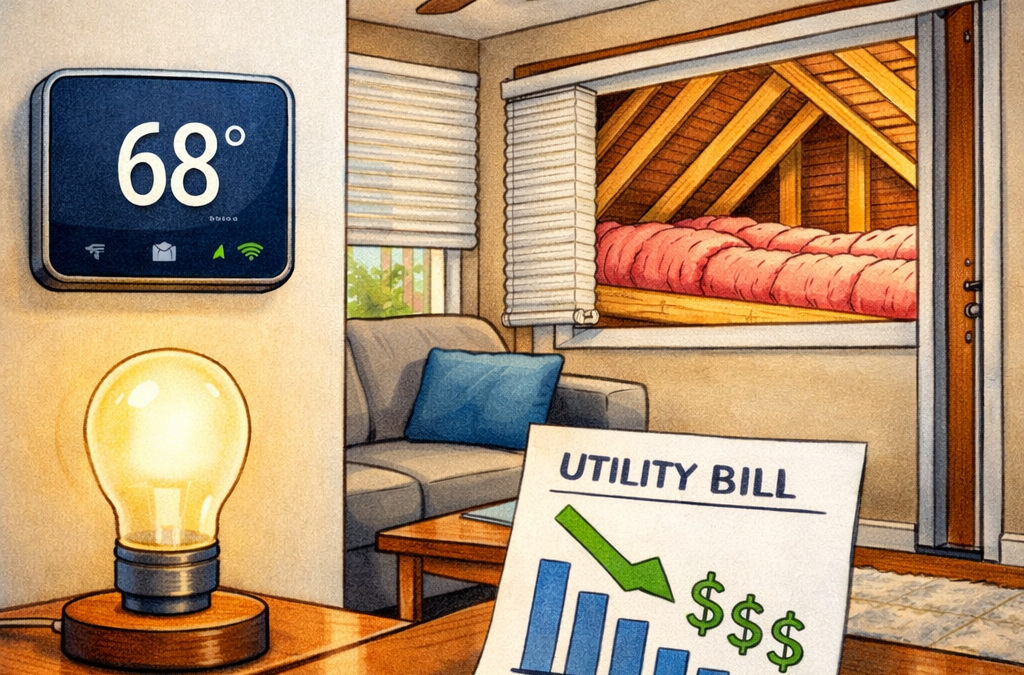
Your monthly utility bills drain your budget while your home wastes energy through dozens of fixable problems. Most homeowners accept high energy costs as inevitable, unaware that simple, low-cost changes can reduce heating and cooling expenses by 20-50% annually.
Energy efficiency isn't about expensive solar panels or total home renovations. It's about understanding where your home loses energy and implementing strategic improvements that pay for themselves within months or a few years. This comprehensive guide walks you through practical, actionable steps that dramatically reduce your energy bills without breaking your budget.
Understanding Your Energy Usage
Before making changes, understand where your energy dollars actually go. The typical American home's energy consumption breaks down approximately as follows:
- Heating and cooling: 50-60%
- Water heating: 15-20%
- Appliances and electronics: 15-20%
- Lighting: 5-10%
This distribution means the highest-impact improvements target heating, cooling, and water heating—not the areas most homeowners focus on first.
The Foundation: Air Sealing and Insulation
Air leaks and inadequate insulation represent the single largest source of energy waste in most homes. According to the U.S. Department of Energy, air leaks can account for 25-40% of heating and cooling energy use.
Finding and Sealing Air Leaks
Air leaks occur where different building materials meet and around penetrations through your home's envelope.
Common air leak locations:
- Window and door frames
- Electrical outlets and switch plates on exterior walls
- Baseboards along exterior walls
- Attic hatches and pull-down stairs
- Recessed lighting fixtures
- Plumbing and electrical penetrations
- Fireplace dampers
- Rim joists in basements
- Where walls meet foundations
DIY air sealing:
The most cost-effective energy improvement you can make costs under $100 and takes one weekend. Purchase caulk, weatherstripping, and foam sealant from any hardware store.
Application guide:
- Caulk for gaps less than 1/4 inch (windows, door frames, baseboards)
- Foam sealant for gaps 1/4 to 3 inches (larger penetrations, rim joists)
- Weatherstripping for moving components (doors, operable windows)
Expected savings: $100-$300 annually for a $50-$100 investment. Payback period: 4-12 months.
Insulation: Your Home's Thermal Barrier
Insulation slows heat transfer between your home's interior and exterior. More insulation means your heating and cooling systems work less to maintain comfortable temperatures.
Attic insulation priority:
Heat rises, making your attic the most critical area to insulate. Most homes should have R-38 to R-49 insulation (roughly 12-16 inches of fiberglass or 10-14 inches of cellulose). Many older homes have half that amount or less.
Check your insulation:
Go into your attic and measure the depth of existing insulation. If you can see the tops of your floor joists, you need more insulation.
Adding attic insulation:
Professional installation costs $1,500-$3,500 for a typical home. DIY installation costs $500-$1,000 in materials. This improvement can reduce heating and cooling costs by 10-50% depending on current insulation levels.
Expected savings: $300-$1,000 annually. Payback period: 2-7 years.
Other insulation priorities:
After attics, focus on:
- Basement or crawlspace walls and rim joists
- Exterior walls (if accessible during renovation)
- Floors over unheated spaces
Heating and Cooling Efficiency
Since heating and cooling consume 50-60% of home energy, even small efficiency improvements here yield significant savings.
Programmable and Smart Thermostats
Modern thermostats automatically adjust temperatures based on your schedule and preferences, eliminating the common waste of heating or cooling an empty home.
Energy savings:
The EPA estimates smart thermostats reduce heating costs by 10-12% and cooling costs by 15%. For a household spending $1,500 annually on heating and cooling, that's $150-$200 in savings.
Cost: $120-$300 installed. Payback period: 1-2 years.
Optimal temperature settings:
- Winter heating: 68°F when home, 60-62°F when away or sleeping
- Summer cooling: 78°F when home, 85°F when away
- Each degree of adjustment saves approximately 3% on heating/cooling costs
HVAC System Maintenance
Regular maintenance keeps your heating and cooling systems running efficiently and extends their lifespan.
Essential maintenance tasks:
Monthly:
- Change or clean air filters (dirty filters reduce efficiency by 5-15%)
Annually:
- Professional HVAC tune-up including cleaning coils, checking refrigerant, testing controls
- Clean outdoor condenser unit
- Seal duct leaks (professionals or DIY with mastic sealant)
As detailed in our article about seasonal home maintenance, consistent HVAC care prevents efficiency losses and expensive repairs.
Impact: Well-maintained systems run 15-25% more efficiently than neglected ones.
Cost: Professional service $150-$200 annually, filters $50-$100 annually. Savings: $200-$400 annually in reduced energy costs and avoided repairs.
Strategic Fan Use
Ceiling fans don't cool rooms—they cool people by creating air movement. Use fans strategically:
Summer: Run fans counterclockwise to create downdraft. This allows you to raise thermostat 4°F while maintaining comfort, saving approximately 12% on cooling costs.
Winter: Run fans clockwise on low to push warm air down from ceilings without creating drafts.
Critical: Turn fans off when leaving rooms. Fans running in empty rooms waste energy.
Window Management
Windows are thermal weak points in your home's envelope. Strategic window management improves efficiency without replacement costs.
Summer strategies:
- Close blinds, shades, or curtains on sun-facing windows during the day
- Install reflective window film on south and west-facing windows
- Use exterior shade (awnings, trees, screens) to block heat before it enters
- Open windows for cross-ventilation during cool evening hours
Winter strategies:
- Open window coverings on sunny south-facing windows during the day
- Close all window coverings at night to reduce heat loss
- Use insulating cellular shades (R-value up to 5)
- Apply plastic film window insulation kits to drafty windows ($10-$20 per window)
Impact: Strategic window management can reduce heating and cooling costs by 10-25%.
Water Heating Efficiency
Water heating consumes 15-20% of home energy. Several simple adjustments dramatically reduce these costs.
Temperature Adjustment
Most water heaters are set to 140°F by default. Lowering to 120°F provides adequate hot water while reducing energy consumption and scalding risk.
Savings: $30-$60 annually for this 5-minute adjustment.
Water Heater Insulation
Older water heaters (pre-2004) benefit from insulation blankets that reduce standby heat loss.
Application: $20-$30 insulation blanket wraps around tank in 30 minutes. Savings: $20-$45 annually. Payback: 6-18 months.
Note: Modern water heaters have adequate built-in insulation and don't benefit from blankets.
Pipe Insulation
Insulating hot water pipes reduces heat loss between the water heater and fixtures, delivering hotter water faster.
Cost: $0.50-$1 per linear foot of foam pipe insulation. Savings: $10-$20 annually, plus water savings from shorter wait times. Benefit: Hot water arrives 2-4°F warmer.
Low-Flow Fixtures
Modern low-flow showerheads and faucet aerators maintain pressure while reducing water flow.
Flow rates:
- Standard showerhead: 2.5-5 gallons per minute (GPM)
- Low-flow showerhead: 1.5-2.0 GPM
- Standard faucet: 2.2 GPM
- Low-flow aerator: 1.0-1.5 GPM
Cost: $10-$40 per fixture. Savings: $50-$150 annually (combined water and energy savings). Payback: 2-6 months.
Appliance and Electronics Efficiency
Appliances and electronics consume 15-20% of home energy. Smart usage and strategic upgrades reduce these costs.
Phantom Energy Loads
Electronics draw power even when "off" if plugged in. This standby power—called phantom load—consumes 5-10% of residential electricity.
Major phantom load culprits:
- Cable boxes and DVRs
- Gaming consoles
- Desktop computers and monitors
- Printers and scanners
- Phone chargers
- Microwave ovens (clock displays)
- Any device with LED displays or remote controls
Solution: Use power strips to completely disconnect devices when not in use, or use smart power strips that automatically cut power to peripherals.
Savings: $100-$200 annually.
Refrigerator and Freezer Efficiency
Refrigerators run 24/7, making efficiency critical.
Optimization strategies:
- Set refrigerator temperature to 37-40°F
- Set freezer temperature to 0-5°F
- Keep units full (full refrigerators maintain temperature better)
- Vacuum condenser coils twice annually (improves efficiency 25-30%)
- Ensure door seals are tight (dollar bill test: close door on dollar bill; should resist pulling out)
- Keep units away from heat sources (ovens, direct sunlight)
Impact: Proper maintenance keeps refrigerators running at peak efficiency, saving $50-$100 annually.
Washing Machine and Dryer
Washing machine:
- Wash full loads only
- Use cold water (90% of washing machine energy heats water)
- Choose high-efficiency (HE) detergent for HE machines
Savings from cold water washing: $60-$100 annually.
Dryer:
- Clean lint trap before every load (improves efficiency 30%)
- Clean dryer vent annually (prevents fires, improves efficiency)
- Use moisture sensor settings instead of timed drying
- Dry consecutive loads while dryer is warm
- Consider air-drying when possible
Impact: Efficient dryer use saves $50-$100 annually.
Dishwasher Efficiency
- Run only full loads
- Use air-dry or energy-saving dry settings
- Skip heated dry
- Scrape (don't rinse) dishes before loading
Savings: $40-$60 annually compared to heated drying.
Lighting Efficiency
Lighting consumes 5-10% of home energy. Complete LED conversion delivers quick returns with minimal investment.
LED Light Bulb Conversion
LED bulbs use 75% less energy than incandescent and last 25-50 times longer.
Cost comparison (based on 3 hours daily use):
60-watt incandescent:
- Annual energy cost: $7.50
- Lifespan: 1,000 hours (11 months)
- Replacement frequency: Annual
15-watt LED equivalent:
- Annual energy cost: $1.88
- Lifespan: 25,000 hours (22 years)
- Replacement frequency: Once every 22 years
Per-bulb savings: $5.62 annually, plus avoided replacement costs.
Whole-home conversion cost: $200-$500 for 40-60 bulbs. Annual savings: $200-$350. Payback period: 1-2 years, then continued savings for decades.
Strategic Lighting Use
- Turn off lights when leaving rooms
- Use task lighting instead of overhead lights when possible
- Install dimmer switches (reducing brightness 25% saves 20% energy)
- Use timers or smart switches for outdoor lighting
- Choose appropriate wattage (many fixtures are over-lit)
Behavioral Changes That Cost Nothing
The most cost-effective energy savings come from behavior modifications requiring zero investment.
Temperature Adjustment Tolerance
Adjusting your comfort expectations saves significantly:
- Wear warmer clothing in winter, cooler clothing in summer
- Use blankets instead of raising heat
- Acclimate gradually to wider temperature ranges
- Each degree of thermostat adjustment saves approximately 3% on heating/cooling
Strategic Cooking
- Use microwave, slow cooker, or toaster oven instead of full oven when possible (uses 50-80% less energy)
- Match pot size to burner size
- Cover pots when cooking (cooks 3x faster)
- Turn off oven 10 minutes before cooking time ends (residual heat finishes cooking)
- Don't preheat longer than necessary (typically 5-10 minutes sufficient)
Savings: $50-$100 annually.
Water Conservation Habits
- Take shorter showers (each minute uses 2-5 gallons hot water)
- Fix dripping faucets immediately (one drip per second wastes 3,000 gallons annually)
- Run dishwasher and washing machine only with full loads
- Don't let water run while brushing teeth or washing dishes
Combined savings: $80-$150 annually.
Strategic Appliance Use
- Do laundry and run dishwasher during off-peak hours if you have time-of-use electricity rates
- Unplug seldom-used appliances
- Air-dry dishes instead of heat-drying
- Line-dry clothes when weather permits
When to Upgrade: Cost-Benefit Analysis
Some efficiency improvements require significant investment. Understanding payback periods helps prioritize upgrades.
Windows
Cost: $300-$1,000+ per window installed. Savings: $125-$465 annually (average based on Energy Star estimates). Payback period: 10-25+ years.
Verdict: Only replace windows that are damaged, rotted, or so drafty that weatherstripping doesn't help. Replacement is expensive relative to savings. Focus on weatherstripping, window film, and coverings first.
HVAC System Replacement
Cost: $5,000-$15,000 for complete system. Savings: $300-$800 annually (modern high-efficiency vs. old standard). Payback period: 10-20 years.
Verdict: Replace when existing system fails or is more than 15-20 years old. Prioritize efficiency ratings: look for SEER 16+ for AC, 95+ AFUE for furnaces. Understanding how your home's systems work together helps you make informed decisions about major equipment replacements.
Water Heater Upgrade
Cost: $800-$3,000 depending on type. Savings: $100-$300 annually (high-efficiency vs. standard). Payback period: 5-15 years.
Verdict: Consider tankless or heat pump models when replacing failed units, but don't replace functioning water heaters solely for efficiency unless they're very old and inefficient.
Major Appliance Upgrades
Cost: Varies by appliance ($400-$2,000+). Savings: $50-$150 annually per appliance. Payback period: 8-20 years.
Verdict: Choose Energy Star models when replacing broken appliances, but don't replace functioning appliances solely for energy savings unless they're very old. The embodied energy in manufacturing new appliances often exceeds years of operational savings.
Creating Your Energy Efficiency Action Plan
Prioritize improvements by return on investment and implementation difficulty.
Immediate Actions (This Month)
These require minimal investment and deliver immediate returns:
- Adjust water heater temperature to 120°F
- Change HVAC filters
- Install LED bulbs in most-used fixtures
- Adjust thermostat settings
- Reverse ceiling fan directions seasonally
- Unplug unused electronics
- Fix dripping faucets
Combined cost: $50-$150 Annual savings: $300-$600 Payback: 1-3 months
Short-Term Projects (Next 3 Months)
These require modest investment and DIY effort:
- Complete whole-home air sealing
- Convert all lighting to LED
- Install programmable thermostat
- Add weatherstripping to doors and windows
- Insulate water heater and pipes
- Install low-flow fixtures
Combined cost: $400-$800 Annual savings: $500-$900 Payback: 6-18 months
Medium-Term Projects (Next Year)
These require larger investment but deliver substantial returns:
- Add attic insulation if currently inadequate
- Schedule professional HVAC maintenance
- Seal and insulate ductwork
- Install storm windows or window treatments
- Insulate basement/crawlspace
Combined cost: $2,000-$5,000 Annual savings: $600-$1,200 Payback: 2-5 years
Long-Term Considerations (Multi-Year Planning)
Budget for these major improvements when systems need replacement:
- High-efficiency HVAC system (when current system fails)
- Heat pump water heater (when current heater fails)
- Energy Star appliances (as current ones fail)
- Window replacement (only if severely damaged)
Measuring Your Progress
Track your energy consumption to verify improvements are working.
Tracking methods:
- Compare monthly utility bills year-over-year (account for weather differences)
- Use utility company online tools showing consumption history
- Install whole-home energy monitors
- Track specific interventions with before/after measurements
Normalize for weather: Heating and cooling degree days help compare energy use across different weather conditions. Most utility companies provide this data.
The Compounding Benefits
Energy efficiency delivers benefits beyond reduced utility bills:
Financial benefits:
- Lower monthly operating costs
- Increased home value (energy-efficient homes sell for 2-6% more)
- Reduced maintenance costs (well-maintained systems last longer)
- Protection against rising energy prices
Comfort benefits:
- More consistent temperatures throughout home
- Reduced drafts
- Better humidity control
- Quieter operation (newer, efficient equipment)
Environmental benefits:
- Reduced carbon footprint
- Lower demand on electrical grid
- Decreased reliance on fossil fuels
Common Efficiency Mistakes to Avoid
Mistake 1: Focusing Only on Lighting
While LED conversion is cost-effective, lighting represents only 5-10% of home energy use. Focus first on heating, cooling, and water heating—the areas consuming 85% of home energy.
Mistake 2: Ignoring Air Sealing
Adding insulation without addressing air leaks is like wearing a winter coat with the zipper open. Air sealing should always precede insulation upgrades.
Mistake 3: Replacing Functioning Equipment
The embodied energy in manufacturing new equipment often exceeds years of efficiency gains. Replace equipment when it fails, choosing high-efficiency models, but don't replace functioning units solely for energy savings unless they're very old and inefficient.
Mistake 4: Closing Vents in Unused Rooms
Closing vents increases pressure in ductwork, reduces HVAC efficiency, and can damage equipment. Instead, close doors and adjust thermostat.
Mistake 5: Setting Back Thermostat Drastically
Extreme thermostat setbacks (more than 8-10°F) can cost more energy as systems work harder to recover temperature. Moderate setbacks (5-8°F) deliver savings without recovery penalties.
The Bottom Line on Energy Efficiency
Energy efficiency isn't about sacrifice—it's about eliminating waste. Your home wastes energy through air leaks, poor insulation, inefficient equipment, and wasteful habits. Addressing these issues systematically reduces utility bills by 20-50% while improving comfort.
Start with the highest-impact, lowest-cost improvements: air sealing, LED conversion, thermostat adjustment, and water heater optimization. These deliver rapid payback and fund larger improvements through accumulated savings.
Focus your efforts where energy consumption is highest: heating and cooling (50-60%), water heating (15-20%), and appliances (15-20%). Small improvements in these areas yield larger savings than dramatic changes in low-consumption areas.
The most effective approach combines physical improvements with behavioral changes. The most efficient equipment still wastes energy if used carelessly. Conversely, even old equipment can be used more efficiently through smart habits.
Take advantage of the wealth of knowledge available from authoritative sources. The U.S. Department of Energy provides comprehensive information about home energy efficiency at https://www.energy.gov/energysaver/energy-saver, including calculators, guides, and rebate information to help you maximize your energy savings.
Remember that energy efficiency is an ongoing process, not a one-time project. As discussed in our article about the cost of delaying home repairs, small issues compound over time—and so do small improvements. Each efficiency upgrade compounds previous improvements, creating increasing returns.
Your home will never be perfectly efficient, but it can always be more efficient than it is today. Start where you are, use what you have, and do what you can. The money you save funds additional improvements, creating a virtuous cycle of increasing efficiency and decreasing costs.
The best time to improve your home's energy efficiency was years ago. The second-best time is today.